
Mental Health
4 min read
December 10, 2022
Mental health: do you care?

Mental health: do you care?

Mental illness represents one of the greatest public health challenges in Australia and globally. Depression, anxiety, and suicide affect millions of people across all ages, with particularly high impact among young adults, men, Indigenous communities, and LGBTQ+ individuals—yet large gaps remain in awareness, detection, and access to care.

Have you suffered challenges to your mental health?

Depression has the third highest burden of all diseases in Australia (13%) [1] and also third globally [2].

Almost half (45%) Australians will experience a mental illness in their lifetime [3].

One in five, about 20%, Australians aged 16-85 experience a mental illness in any year:

  • 11.5% have one disorder and 8.5% have two or more disorders.
  • 14% of Australians suffer from anxiety disorders.
  • 6% depressive disorders [4].

The age with the highest prevalence of mental illness is between 18-24 years of age.

21.2% of adolescents between 15-19 years of age met the criteria for a probable serious mental illness [5].

Six Australians die from suicide every single day, with a further 30 people will attempt to take their own life [6].

Suicide is the leading cause of death for people Australians aged 25-44 and the second leading cause of death for young people aged 15-24 [7].

Australians are more likely to die by suicide than skin cancer.

Indigenous Australians experience double the rate of suicide when compared to non-indigenous Australians [8].

The LGBT community experiences four times the rate when compared with those identified as heterosexual [9].

In 2011, men accounted for 76% of deaths from suicide [10], yet an estimated 72% of males don’t seek help for mental disorders.

54% of sufferers with mental illness do not seek treatment [1], which is only compounded by the delay in treatment due to problems with detection, social stigma and accurate diagnosis.

Individuals with mental illness accessing treatment are half that of people seeking treatment with physical disorders [11].It’s time to raise awareness for mental health.

References

  1. Australian Institute of Health and Welfare. (2014). Australia’s Health 2014. AIHW: Canberra.
  2. World Health Organisation. (2008). The global burden of disease: 2004 update.
  3. Australian Bureau of Statistics. (2009). National Survey of Mental Health and Wellbeing: Summary of Results, 4326.0, 2007. ABS: Canberra.
  4. Kitchener, B.A. and Jorm, A.F. (2009). Youth Mental Health First Aid: A manual for adults assisting youth. ORYGEN Research Centre, Melbourne.
  5. Ivancic, L., Perrens, B., Fildes, J., Perry, Y. and Christensen, H. (2014). Youth Mental Health Report, June 2014. Mission Australia and Black Dog Institute, Sydney.
  6. The Australian Senate. (2010). The Hidden Toll: Suicide in Australia Report of the Senate Community Affairs References Committee. Commonwealth of Australia, Canberra.
  7. http://www.aihw.gov.au/deaths/causes-of- death
  8. Australian Bureau of Statistic. (2012). Australian Health Survey: First Results. ABS, Canberra.
  9. National Mental Health Commission. (2013). A Contributing Life, the 2013 National Report Card on Mental Health and Suicide Prevention. NMHC, Sydney.
  10. Department of Health and Ageing. (2013). National Mental Health Report 2013: tracking progress of mental health reform in Australia 1993 – 2011. Commonwealth of Australia, Canberra.
  11. Commonwealth of Australia. (2010). National Mental Health Report 2010. Canberra, Australia.
Next news

The effectiveness of Vitamin B6 in the treatment of PMS dates back over 40 years. Results were noted, such as:

  • ‘Significant decreases in all symptoms’ (1)
  • 70% reporting good or partial response’ (2)
  • ‘Improvement in 63% of patients on pyridoxine’ (3)

The dose used within these studies ranged from 40-200mg (with a possible risk of toxicity at 200mg).

Only one patient of the 940 participating in these trials indicated the presence of any side effects that could be attributed to the neuropathy associated with pyridoxine toxicity. (4)

A meta-analysis of nine published trials involving almost 1,000 women with PMS found that vitamin B6 is more effective in reducing PMS symptoms than placebo. (5)

A double-blind, randomized controlled trial in 94 women found that 80 mg pyridoxine taken daily over the course of three cycles was associated with statistically significant reductions in a broad range of PMS symptoms, including:

  • Moodiness
  • Irritability
  • Forgetfulness
  • Bloating
  • Anxiety (6)

Below are my preferred dietary sources of Vitamin B6 per 100g:

  • Liver – 1mg
  • Salmon – 0.9mg
  • Sunflower Seeds – 1.33mg
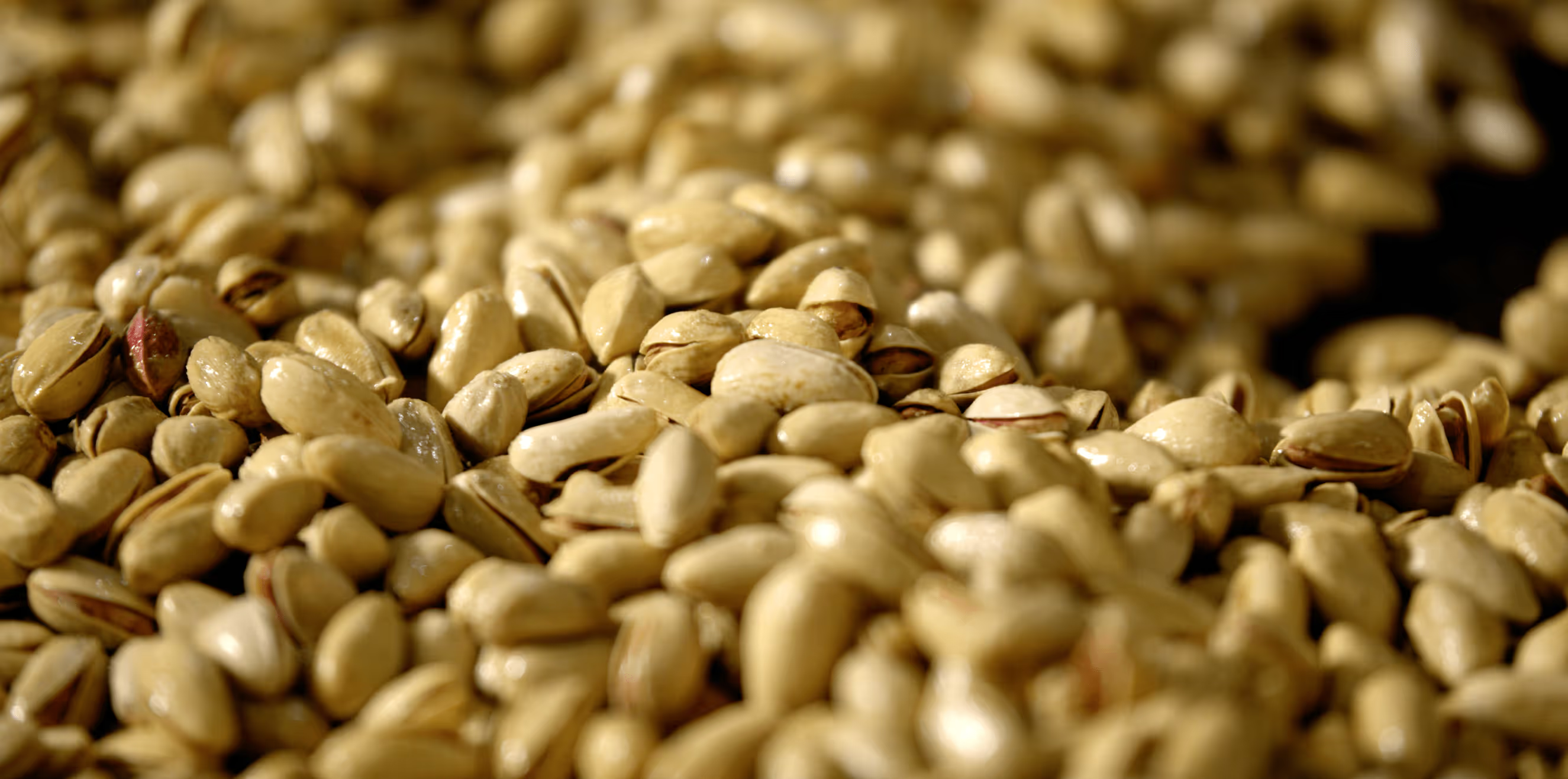
  • Pistachios – 1.7mg

The recommended daily allowance sits around 1.3mg, which makes an easy target to obtain via food.

However, to achieve the dosage used in the above studies is between 30-153 times higher than the RDA, making it unachievable to obtain through diet alone.

As you can see here, Designs For Health provides 50mg of Vitamin B6 in just one capsule. This is in the form of Vitamin B6 in its most bioavailable form – P5P.

Magnesium and Vitamin B2 are required for the conversion of P5P. The deficiency rates of magnesium make this conversion much harder.

High protein diets or genetic susceptibilities (such as NBPF3) are factors that can increase the need for more Vitamin B6.

Have you ever used B6 for your PMS?

References:

  1. Goei and Abraham, 1983
  2. Brush, 1988
  3. Day, 1979
  4. London RS, et al. 1991
  5. Wyatt KM, et al. BMJ 1999
  6. Kashanian M, et al. 2007
Nutrition
6 min read
Vitamin B6 and PMS
Vitamin B6 and PMS
While food sources can meet daily requirements, the doses shown to improve PMS are difficult to reach through diet alone. Supplemental B6, particularly in its bioactive form (P5P), alongside adequate magnesium and vitamin B2, may support symptom reduction in susceptible individuals.
December 10, 2022

Globally, more than 50% of all people are infected [8], with the prevalence of escalating with age. [9]

Helicobacter Pylori is a gram-negative bacterium that colonises within the human gastrointestinal tract (this includes the mouth).

Symptoms:

  • Belching
  • Nausea
  • Vomiting
  • Difficulty swallowing
  • Abdominal discomfort
  • Upper abdominal bloating
  • Decreased appetite
  • Peptic ulcers
  • Bad breath
  • Heartburn
  • Reoccurring oral plaque
  • Gingivitis
  • Tooth cavities

Risks:

  • H. Pylori infection is the main cause of chronic gastritis, with an infection rate between 80%-95% in sufferers. [7]
  • It is present in almost all cases of duodenal ulcers and most cases of gastric ulcer [10] with as many as 90% of individuals with ulcers being infected.
  • H. Pylori is a significant contributing factor for the risk of gastric cancers.
  • H. Pylori burrows deep within parietal cells (cells that secrete stomach acid), not only does this make it harder to eradicate, but this also leads to unique symptoms within the host. One factor being hypochlorhydria (low levels of stomach acid secreted within the body); this prevents the host from sterilising bacteria in food, reduces the ability to obtain nutrients desired from food and the inability to assimilate certain key minerals, such as zinc or iron.
  • Reduced intrinsic factor (IF) production is also likely for individuals suffering from a H. Pylori infection. IF is essential to bind with vitamin B12, preventing further breakdown from stomach acid along with attaching to the surface of the ileum to allow for absorption of B12 into the body.
  • H. Pylori can also block vitamin C absorption, thus compounding to the amount of oxidative damage inflicted onto the body.
  • H. Pylori infection augments the gastric mucosal damage induced by NSAIDs.
  • H. Pylori antagonises Aspirin-induced delayed ulcer healing due to suppression of acid secretion by the enhancement of PGE2 possibly derived by COX2 expression.
  • Benefits:
    Due to the nature of the parasite being a gram-negative bacteria, it shifts the immune system more towards a Th1 mediated response as opposed to Th2 – this can reduce the severity of allergies, asthma and other humeral/mucosal reactions.

Benefits:

Due to the nature of the parasite being a gram-negative bacteria, it shifts the immune system more towards a Th1 mediated response as opposed to Th2 – this can reduce the severity of allergies, asthma and other humeral/mucosal reactions.

References:

  1. Morales-Espinosa R, et al., Oral Microbiol Immunol. 2009
  2. Nguyen AM, et al., Oral Surg Oral Med Oral Pathol Oral Radiol Endod. 1995
  3. Miyabayashi H, et al., Helicobacter. 2000
  4. Gebara EC, et al., J Clin Periodontol. 2006
  5. Dye BA, et al., Am J Public Health. 2002
  6. Eskandari A, et al. Med Oral Patol Oral Cir Bucal.
  7. Abro AH, et al. J Ayub Med Coll Abbottabad. 2011
  8. Saudi J Gastroenterol. 2014
  9. J Gastrointestin Liver Dis. 2011
  10. J Gastroenterol Hepatol. 2011
  11. Surveillance of Helicobacter pylori antibiotic resistance in England and Wales; Public Health England, 2008
  12. Jernberg, C, et al. 2010
Gut Health
6 min read
H Pylori: 50% globally infected
H. pylori disrupts stomach acid production, damages the gastric lining, and interferes with key nutrients such as B12, iron, zinc, and vitamin C. Although it may modulate immune balance by shifting responses toward Th1, its long-term risks to digestive, immune, and metabolic health are significant.
December 10, 2022

You are only as ‘strong’ as your weakest link

Our body is a complex yet beautiful organism that we barely scrape the surface when it comes to an understanding of how we work.

What we do know is that every system within our body is interdependent on one another. It works and flows synergistically and has a bidirectional relationship.

We often prioritise aesthetics whilst neglecting other systems, only paying attention to them when it is too late and hardship, dysfunction, or disease has manifested as a consequence.

The following systems are what need respect, nurture, and care:

  • Muscular System
  • Structural
  • Endocrinological
  • Neurological
  • Gastro-Intestinal
  • Microbial
  • Cardiovascular System
  • Pulmonary System
  • Immunological
  • Biotransformation
  • Lymphatic System
  • Psychological
  • Emotional
  • Environmental
  • Spiritual
Philosophy
6 min read
Human symbiosis of health
Focusing on aesthetics while ignoring foundational systems leads to dysfunction over time. True health comes from supporting the body as a whole—physically, mentally, and environmentally.
December 10, 2022
Clarity, confidence, and real results start with one conversation. Let’s map your next chapter — together.